Daily budget app
One number that answers “can I afford this today?”
A monthly budget is a plan; a daily budget is a decision tool. Bottomline does the arithmetic of turning one into the other, so every purchase can be checked against a single, current number.

Monthly budgets fail at the moment of purchase
Knowing you have $1,200 for the month tells you almost nothing standing at a checkout on the 11th. Is a $40 dinner fine or reckless? Monthly numbers are too abstract for daily decisions, which is why so many budgets are technically correct and practically ignored.
Break the month down to today
The math is simple and Bottomline keeps it current for you. Say you earn $3,000: rent and fixed costs take $1,400, recurring subscriptions $100, and you set aside $300 for savings. That leaves $1,200 of flexible money — $40 a day across a 30-day month. Now the $40 dinner has an answer: it’s exactly today’s budget.
How Bottomline turns a month into a day
A daily spending number
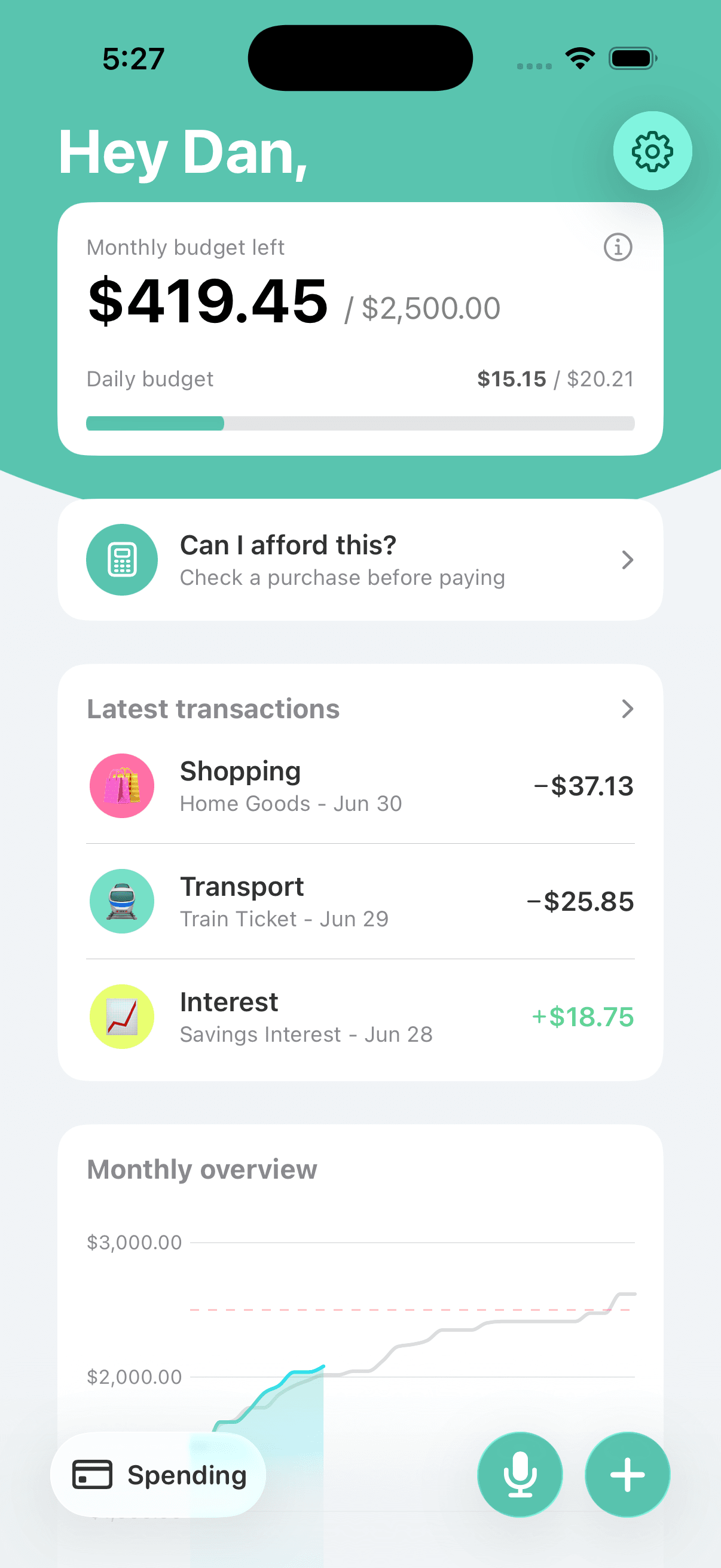
Bottomline translates your monthly budget into what you can spend per day to land on track at month-end. One number, checked in a glance, instead of mental math in the queue.
Fixed costs handled first
Recurring expenses like rent, utilities, and subscriptions are part of the plan, so the daily number reflects only genuinely flexible money. Your bills can’t silently eat the budget you thought you had.
Logging keeps the number honest
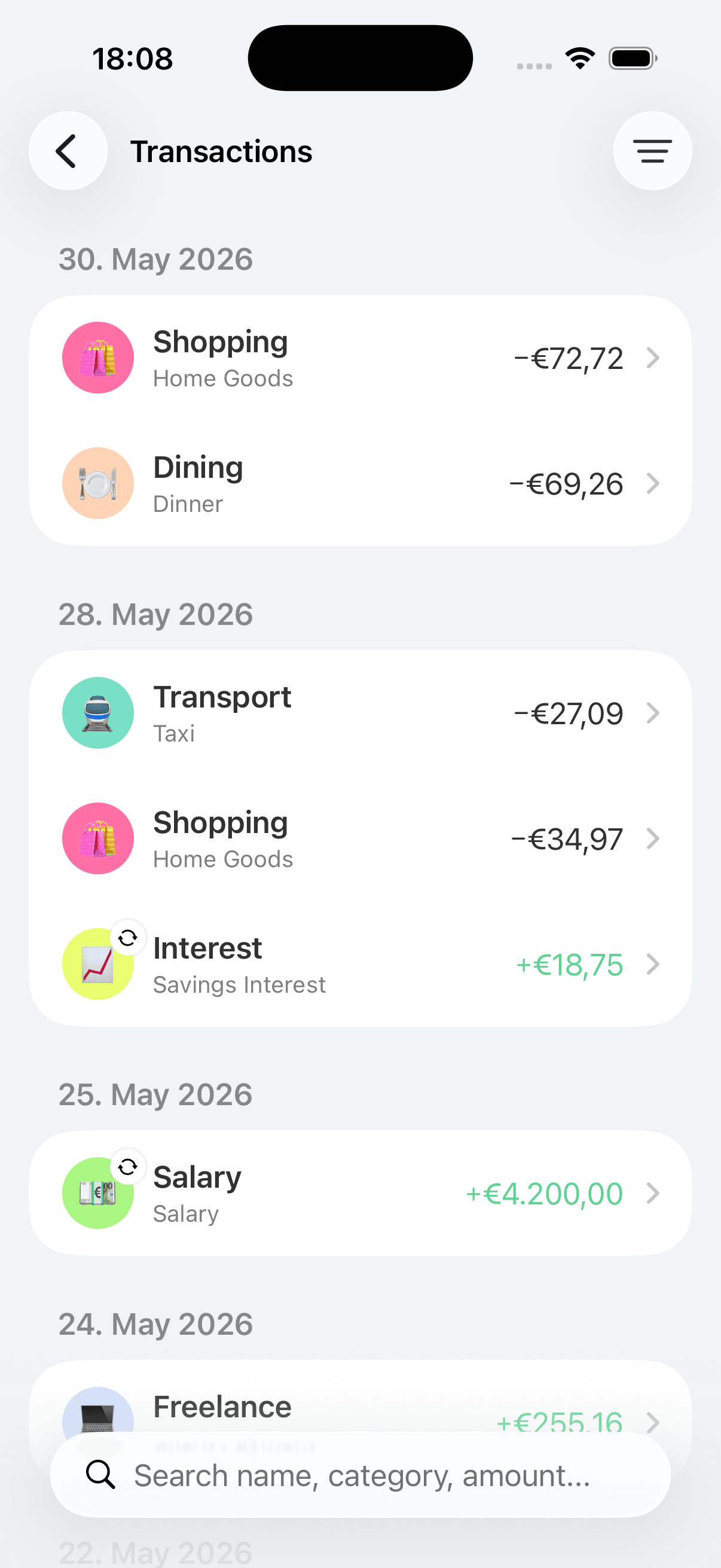
Each expense you log, in about three taps, keeps your remaining budget current. The daily number is only useful if it reflects reality, and manual entry means it always does.
Pacing, not perfection
A daily budget is a pace, not a rule. Overspend at a birthday dinner and the month isn’t broken — you just know exactly how much ground to make up on quieter days.
Category insights for recalibrating
Monthly breakdowns show which categories keep pushing you past the daily number. That tells you whether to adjust behavior or admit the budget was set too tight.
Today’s number, front and center
Bottomline keeps the daily budget visible alongside what you’ve spent, so the next decision is informed before you make it.
Frequently asked questions
How is a daily budget calculated?
Start with monthly income, subtract fixed costs, recurring bills and subscriptions, and whatever you’re saving. What remains is flexible money; divide it by the days in the month. $1,200 of flexible money in a 30-day month is $40 a day. Bottomline keeps that arithmetic up to date as you log spending.
What happens if I overspend one day?
Nothing dramatic — that’s the point of pacing. A $60 day against a $40 budget means you’re $20 ahead of pace, and a couple of lighter days absorb it. The daily number exists to make that visible, not to punish you.
Do bills count against my daily number?
No. Rent and subscriptions are set up as recurring expenses and accounted for before the daily number is derived. The daily budget covers flexible spending only — groceries, eating out, the spontaneous stuff.
Why a daily number instead of weekly or monthly?
Because spending decisions happen daily. A week still leaves room to tell yourself “I’ll make it up by Sunday.” A daily number matches the rhythm of actual purchases, which makes it the most honest unit of feedback.
Do I have to redo the math when my income changes?
You update your budget and Bottomline recalculates from there. The worked-out example above is what the app does for you continuously, so the number on screen always reflects your current plan and your logged spending.
Related Bottomline pages
- Manual expense tracker for iPhoneThe daily number is only as good as your entries — here’s how the three-tap logging habit works.
- Subscription tracker for iPhoneGetting recurring costs right is step one of the daily-budget math.
- Best budgeting app for iPhoneDeciding between a daily-number manual app and a bank-linked one? An honest comparison.
Know today’s number before you spend it.
Download Bottomline and turn your monthly budget into a daily figure you can actually act on.