You open your banking app, glance at your card activity, and see the usual mix. Rent. Groceries. A coffee run. Two subscriptions you forgot about. A takeout order from a long day. Then you ask the question almost everyone asks at some point: where did my money go?
That question usually isn't a math problem. It's a categorization problem.
The distinction between discretionary vs non-discretionary spending is often framed as needs versus wants, or essentials versus extras. But real budgets don't behave that neatly. Internet might look optional on paper and feel mandatory in daily life. A gym membership could be a luxury for one person and part of physical rehab for another. A car payment might be essential if you need the car to get to work.
That's why the useful skill isn't memorizing definitions. It's learning how to sort messy, real-world expenses into categories you can manage.
Table of Contents
- The Core Difference Discretionary vs Non-Discretionary Spending
- Discretionary vs. Non-Discretionary Spending at a Glance
- The most practical test
- Why This Distinction Is Your Budgeting Superpower
- Why it matters in the real world
- What this gives you that a generic budget doesn't
- Navigating the Grey Areas Categorizing Tricky Expenses
- When optional starts to feel essential
- A simple decision filter for messy categories
- A Practical Guide to Tracking Your Spending with Bottomline
- Set up categories that match real life
- Use recurring entries and daily allowance well
- Actionable Tips to Reduce Discretionary Spending
- Cut friction, not all enjoyment
- Redirect the money on purpose
- Frequently Asked Questions
- Is a car payment discretionary or non-discretionary
- How should I handle variable essentials like utilities or groceries
- How often should I re-categorize expenses
The Core Difference Discretionary vs Non-Discretionary Spending
At the simplest level, non-discretionary spending covers the costs you need to keep life running. Discretionary spending covers the costs you choose because they improve comfort, convenience, or enjoyment.
A helpful plain-English definition comes from Eastern Fin's explanation of discretionary and non-discretionary expenses, which describes non-discretionary spending as essentials like food, clothing, and housing, and discretionary spending as optional purchases like luxury items, entertainment, and travel.
That sounds straightforward. In practice, the key difference is flexibility. If you stopped paying a non-discretionary expense, daily life or a core obligation would break quickly. If you paused a discretionary expense, life might be less fun or less convenient, but it would still function.
Discretionary vs. Non-Discretionary Spending at a Glance
| Criterion | Non-Discretionary Expenses | Discretionary Expenses |
|---|---|---|
| Purpose | Keeps basic life or core obligations running | Improves lifestyle, comfort, or enjoyment |
| Necessity | Usually essential | Usually optional |
| Flexibility | Harder to delay without consequences | Easier to pause, cut, or reduce |
| Examples | Rent, groceries, utilities, insurance, basic clothing | Dining out, hobbies, travel, entertainment, impulse shopping |
| Budget treatment | Protect first | Review often |
| During a cash crunch | Trim carefully, renegotiate if possible | Cut first |
The most practical test
Don't ask, "Is this good or bad?" Ask, "Can I delay this without causing a real problem?"
That lines up with Ramp's description of discretionary expenses in business budgeting, which frames a discretionary expense as one that can often be delayed for 3 to 6 months without disrupting core operations. That business lens works surprisingly well for personal budgets too.
> Practical rule: If an expense can wait and your life still works, it belongs somewhere in your discretionary review pile.
Many beginners struggle with this idea. They think calling something discretionary means it's frivolous. It doesn't. A language app, a hobby class, or a nicer grocery choice can matter to you. The label only tells you how much room you have to adjust it when money gets tight.
Why This Distinction Is Your Budgeting Superpower
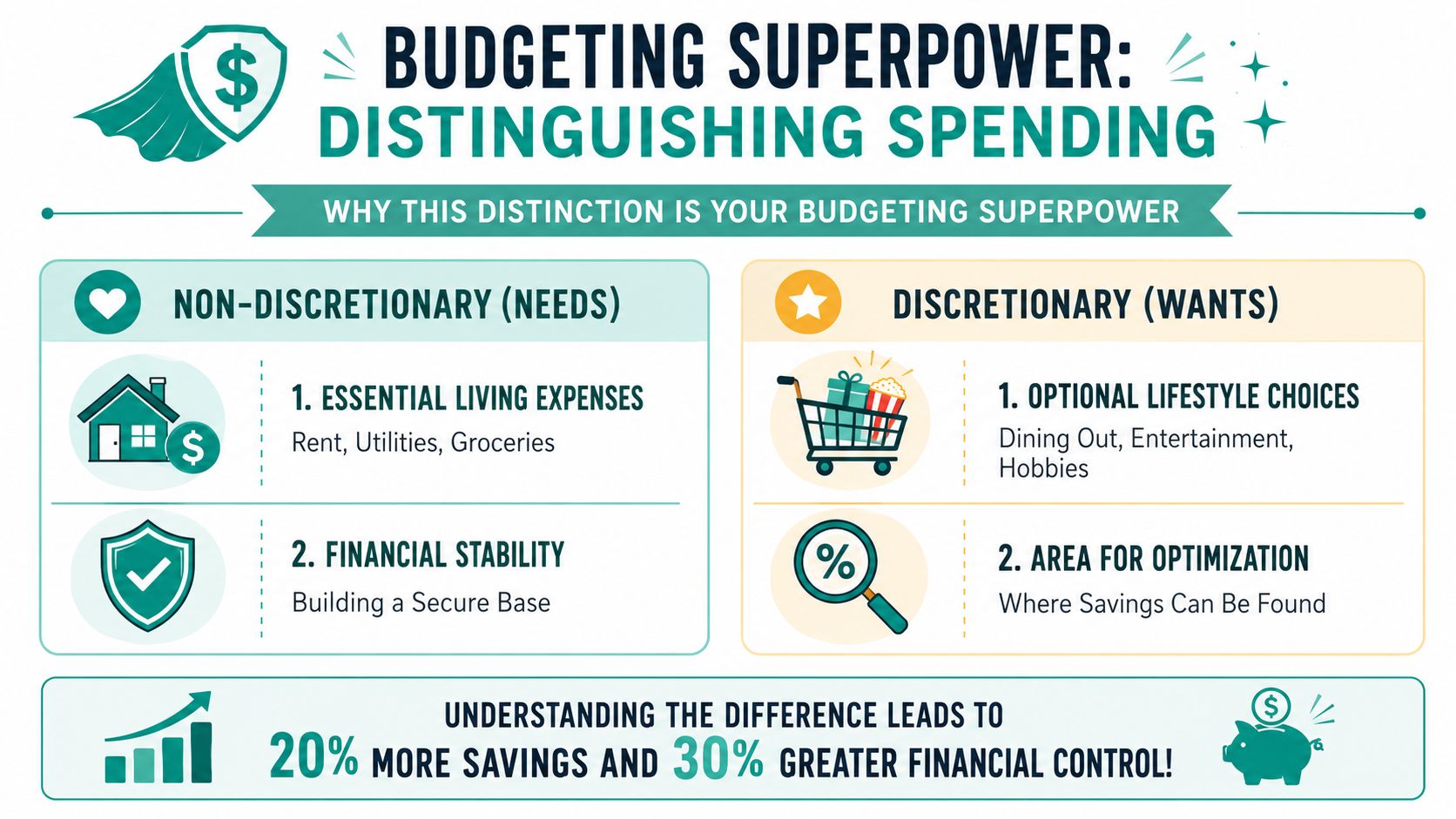
A budget gets easier the moment you separate the bills that must be covered from the spending that can move.
Without that split, every purchase feels equally urgent. That's when people either overspend without noticing or try to cut costs in the wrong places. They cancel something small, ignore something recurring, and still feel like they have no control.
Why it matters in the real world
When your money is categorized clearly, you can make fast decisions under pressure. If your income dips, you already know what can be paused first. If you're trying to save, you know where the flexibility lives. If you want to stop feeling guilty about spending, you can enjoy planned discretionary money without wondering whether you just hurt your essentials.
This split also matches how people behave when confidence changes. J.P. Morgan's May 2025 consumer spending update noted that U.S. discretionary spending rose 2.6% month-to-date, while non-discretionary spending rose about 1.2%. That's a useful reminder. When people feel secure, wants expand faster. When money tightens, those are usually the first categories to get cut.
What this gives you that a generic budget doesn't
- A clear floor: You know the minimum amount needed to operate your month.
- A flexible zone: You can see which categories can absorb a cut without creating damage.
- A better savings plan: Savings stops feeling abstract because you can point to the exact categories that will fund it.
- Less decision fatigue: You stop re-evaluating every transaction from scratch.
A lot of people fail at budgeting because the system asks them to be perfect. A better approach is to build a budget that bends. If you want a simpler framework for that, this guide on how to build a budget that actually sticks is worth reading.
> Separate survival from lifestyle first. Most budgeting clarity comes from that one move.
Navigating the Grey Areas Categorizing Tricky Expenses
Real budgets fall apart in the middle categories. Not rent. Not vacation. The stuff in between.

A streaming service might be entertainment for one household and the main source of family downtime for another. Coffee could be a convenience purchase, or it could be the thing keeping someone from buying pricier lunches out. A gym membership might look easy to cut until you realize it supports pain management, mental health, or a routine that keeps other spending down.
When optional starts to feel essential
This grey area is getting bigger. A 2024 Pew Research finding cited here reported that 38% of U.S. adults consider at-home internet a need, even though it's technically optional. That's not irrational. Work, school, job applications, banking, and social life all run through the internet now.
The lesson is simple. Need and want aren't fixed labels. Context changes them.
Here are a few examples:
- Internet service: Usually treated as non-discretionary if work, school, or household logistics depend on it.
- Car payment: Non-discretionary if you need the car for your job and don't have a workable alternative. More discretionary if the vehicle itself is upgraded beyond what you need.
- Daily coffee: Usually discretionary, unless cutting it causes you to spend more elsewhere or it replaces a more expensive routine.
- Gym membership: Depends on whether it's recreation, structure, rehabilitation, or your main form of health maintenance.
- Streaming subscriptions: Often optional, but some become sticky because they replace other paid entertainment or support family routines.
If subscriptions are one of your messiest grey zones, a focused subscription audit guide can help you sort "I use this" from "I need this."
A simple decision filter for messy categories
Use a short filter instead of arguing with yourself.
- Would stopping this create a real problem within the month?
If yes, it leans non-discretionary.
- Can I replace it with a cheaper version?
If yes, the category may be essential, but the current version may be discretionary.
- Is this tied to income, health, caregiving, or basic functioning?
Those usually deserve stronger protection.
- Am I keeping it from habit or from necessity?
Habit creates a lot of fake essentials.
> The category matters less than the honesty. A shaky label creates a shaky budget.
For a quick walkthrough of thinking through spending trade-offs, this short video is useful:
One more practical point. You don't need one universal truth for every expense forever. A category can change. Internet, transportation, child-related costs, work clothes, and meals out can all shift depending on your job, season of life, health, or income. Good budgeting isn't rigid. It's responsive.
A Practical Guide to Tracking Your Spending with Bottomline
Definitions are helpful. Tracking is what changes behavior.
If you're using a manual tool, the goal isn't to create dozens of perfect categories. It's to create a system you can maintain on a tired Tuesday when you just paid for groceries and a pharmacy run and don't want to think about it anymore.
Set up categories that match real life
Start with two top-level buckets:
- Non-Discretionary
- Discretionary
Then make a few subcategories underneath each one. Keep them broad enough that logging stays quick.
A practical setup might look like this:
| Main category | Useful subcategories |
|---|---|
| Non-Discretionary | Rent, groceries, utilities, transport, insurance, healthcare |
| Discretionary | Dining out, shopping, hobbies, entertainment, convenience spending, subscriptions |
Manual tracking proves helpful. You decide the category at the moment of spending, which forces clarity. If you want a simple Apple-first setup, Bottomline's manual expense tracker for iPhone is built around quick entry instead of bank syncing.
Use recurring entries and daily allowance well
Recurring costs are where many budgets become misleading. If rent, insurance, a phone bill, or a streaming subscription isn't visible until it hits, your budget will always feel tighter than expected.
A simple method works well:
- Add fixed essentials as recurring first: Rent, insurance, core utilities, debt payments, and anything else that must happen.
- Then add recurring wants: Streaming, memberships, app renewals, subscription boxes.
- Review upcoming charges once a week: Not to admire them. To decide whether they still deserve space in the month.
> Reality check: An expense can be small and still deserve attention if it repeats quietly.
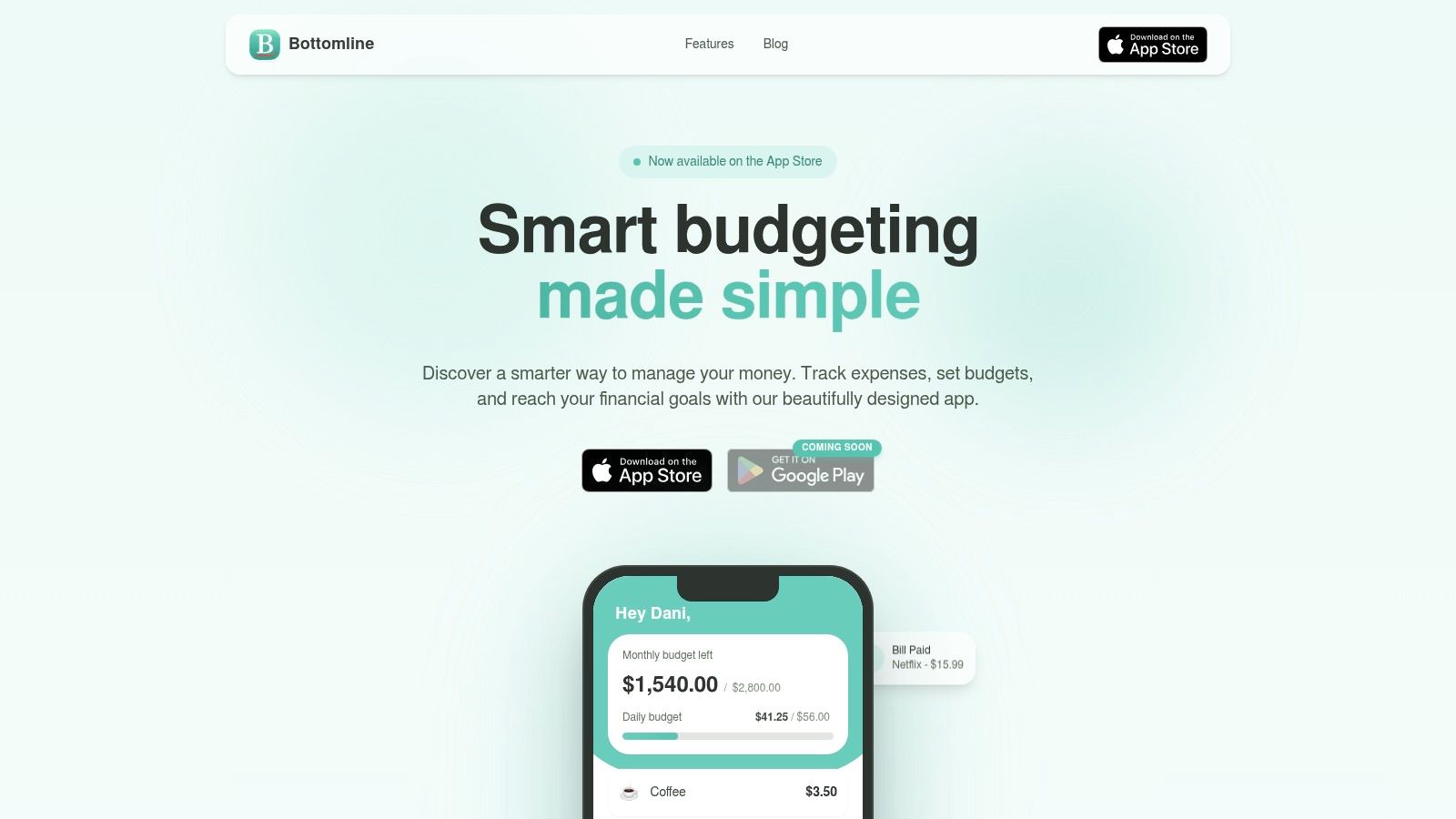
Bottomline's daily allowance feature is especially useful for this kind of split because recurring commitments shape what remains available for everyday discretionary choices. That keeps a random coffee, lunch out, or online order connected to the month as a whole instead of feeling isolated.
The biggest mistake with manual tracking is over-categorizing. Don't build a taxonomy. Build a habit. If you can log an expense in a few taps and review the pattern later, you've already done the hard part better than many do.
Actionable Tips to Reduce Discretionary Spending
Cutting discretionary spending doesn't mean turning your life gray. It means deciding what deserves room and what doesn't.
The easiest wins usually come from purchases that feel small in isolation but repeat without a decision. Convenience spending, subscriptions, impulse online buys, and unplanned food purchases are common trouble spots because they don't look serious one at a time.
Cut friction, not all enjoyment
Try these moves first:
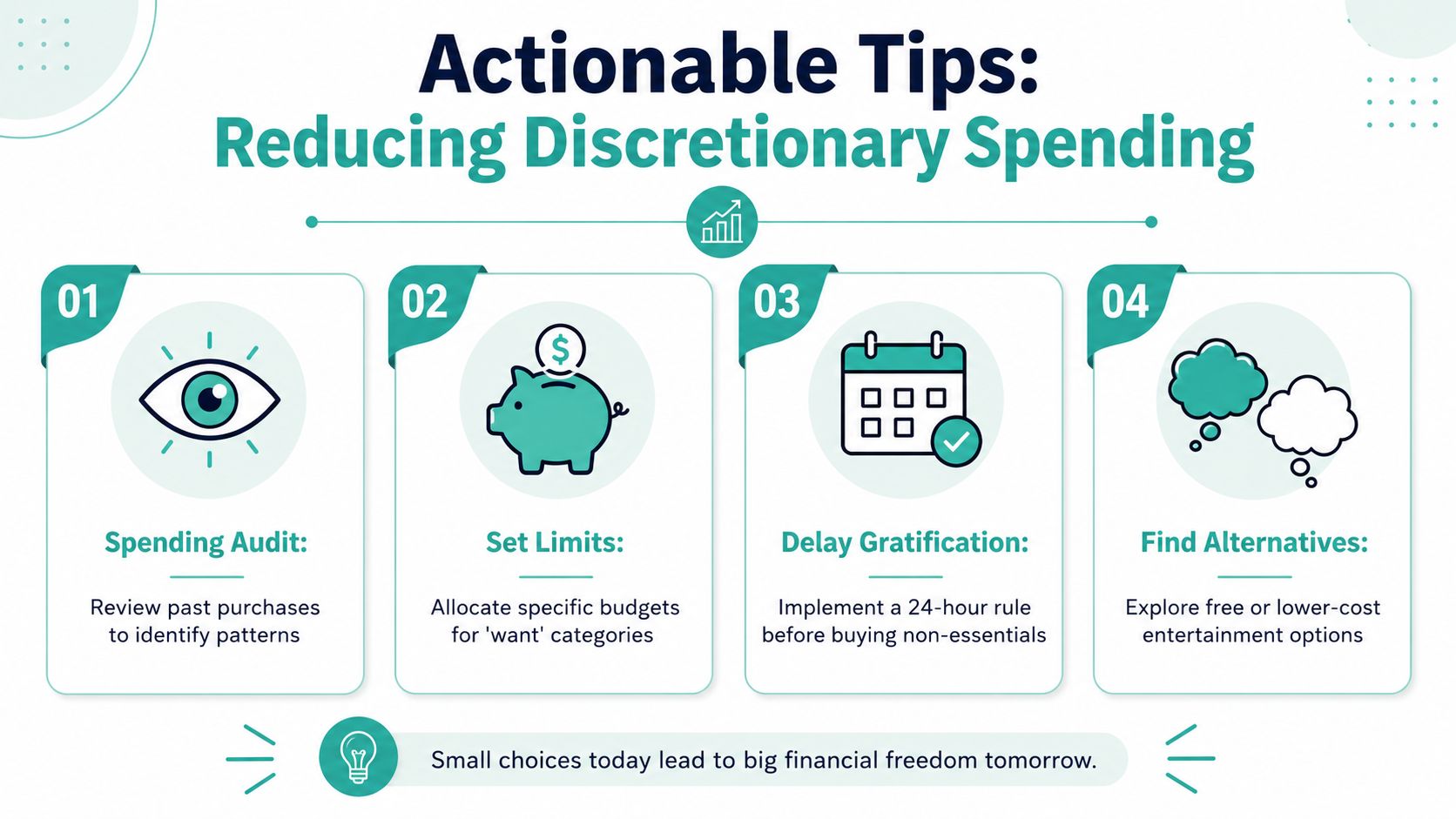
- Audit the quiet repeats: Review subscriptions, memberships, auto-renewals, and app charges. Keep the ones you use on purpose.
- Create a fun-money cap: Give discretionary spending a defined lane so you can enjoy it without stealing from essentials.
- Use a waiting rule: For non-essential purchases, wait before buying. Time kills a surprising number of weak impulses.
- Downgrade before canceling: Swap premium versions for basic ones before cutting the category entirely.
A good reduction plan should still leave room for life. If you remove every enjoyable category, the budget usually snaps back.
Redirect the money on purpose
Don't just "spend less." Give the money a new assignment.
- Move it to savings quickly: The more visible the destination, the easier it is to stay consistent.
- Pay down pressure points: Redirect freed-up money toward bills that create stress.
- Fund seasonal expenses: Holidays, travel, school costs, and annual renewals are easier when you've prepared for them.
- Protect one joy category: Keep one discretionary area you care about. That makes the rest of the cuts easier to stick with.
> Budgets last longer when they feel fair.
If you treat every want as the enemy, you'll resent the system. If you choose your wants deliberately, you stay in control.
Frequently Asked Questions
Is a car payment discretionary or non-discretionary
It depends on function. If you need the car to earn income, handle caregiving, or reach places you can't reasonably access otherwise, treat the payment as non-discretionary. If the issue is the specific car, not the need for transportation, part of the cost may reflect a discretionary choice.
How should I handle variable essentials like utilities or groceries
Treat the category as non-discretionary and the amount as adjustable. Build the category into your essentials, then watch the month-to-month pattern and look for ways to smooth it out. The goal isn't to pretend the bill is optional. It's to manage the range.
How often should I re-categorize expenses
Review categories regularly, especially after job changes, moves, relationship changes, health shifts, or a change in income. A category that made sense six months ago may not fit your life now. That's normal. Budgets should adapt.
---
Bottomline helps you put this into practice without overcomplicating it. If you want a simple iPhone budget app for manual tracking, recurring expenses, and a clear daily spending allowance, try Bottomline.