You've probably done this already. You scroll listings at night, save a few favorites, picture the kitchen, the spare bedroom, maybe even the small patch of outdoor space you'd finally call your own. Then the math shows up. Down payment. Closing costs. Moving expenses. Repairs. Suddenly the goal feels less like a plan and more like a wall.
That reaction makes sense. Saving for a home is hard right now, especially when everyday life keeps competing for the same dollars. The good news is that this goal gets much easier once you stop treating it like one giant number and start treating it like a system. The people who get there usually don't rely on motivation. They rely on a clear target, a realistic timeline, and a budgeting process they can stick with for a long stretch.
This guide takes a practical route. If you prefer a manual, privacy-first budgeting style over connecting all your bank accounts to an app, that can work in your favor. Entering spending yourself forces awareness. You notice patterns faster. You cut more intentionally. And when you're saving for something as important as a home, that awareness matters.
Table of Contents
- The Dream of Homeownership Is Within Reach
- Calculate Your Down Payment Goal and Timeline
- Build the full target
- Turn the target into a monthly number
- Create a Budget That Works for You
- Start with a spending audit
- Use a framework, then adjust it to real life
- Turn the monthly plan into a daily limit
- Sample Monthly Budget for a Home Savings Goal
- Find Ways to Cut Costs and Boost Income
- Cutting costs without burning out
- How income accelerates your goal
- Automate Your Savings and Keep Them Safe
- Make savings hard to interrupt
- Choose safety over higher returns
- Pair automation with visible checkpoints
- Track Your Progress to Stay Motivated
- Visible progress changes behavior
- Your Home Savings Questions Answered
- Should I pause retirement contributions to save faster
- What should I do with a bonus, gift, or tax refund
- How do I save with irregular or freelance income
The Dream of Homeownership Is Within Reach
A lot of first-time buyers start in the same place. They want stability. They want a landlord no longer dictating rent increases or renewal terms. They want a place that feels permanent. Then they open a spreadsheet, see what home prices look like in their area, and wonder if they're already too late.
You're not too late. But you do need a plan that matches reality.
One reason this feels so difficult is that households are saving less than they used to. The United States personal savings rate was 3 percent in both April and May of 2026, far below its historical average of 8.37 percent between 1959 and 2026, according to Trading Economics data on the U.S. personal savings rate. In other words, that means for every $100 of disposable income, only $3 is being saved.
That's why so many smart, responsible people feel stuck. They're not lazy. They're trying to build a down payment in an environment where ordinary saving behavior isn't enough.
> Practical rule: A home fund grows when you make it a separate mission, not when you hope whatever is left at month-end will be enough.
The way through this is to stop asking, “Can I ever save enough?” and start asking better questions. How much home can I safely afford? What exact amount do I need? How many months will I give myself? What spending needs to change, and what can stay?
When you answer those in order, homeownership stops being vague. It becomes a sequence. And sequences are manageable.
Calculate Your Down Payment Goal and Timeline
A couple with a combined income of $120,000 can easily talk themselves into looking at $700,000 listings because the monthly payment looks barely possible on paper. Then taxes, insurance, repairs, and closing costs show up and the plan breaks. Start with a price range you can carry without squeezing the rest of your life.
For those planning to buy, the total house value should generally be no more than 3 to 5 times total annual household income, according to Fidelity's guidance on saving for a house. That gives you a useful first boundary before you fall in love with homes that would leave no room for savings, maintenance, or normal life.
Build the full target
Your goal is not just the down payment.
The Consumer Financial Protection Bureau explains that buyers also need cash for closing costs, and many first-time buyers underestimate that part of the purchase. Their guide on shopping for your home loan and understanding closing costs is a useful reality check. Lower down payment options can get you into a home sooner, but they often come with higher monthly payments and, in many cases, mortgage insurance.
A practical target usually includes four pieces:
- Your expected home price
- Your down payment amount
- Your closing costs
- Your moving and setup cash, such as movers, basic repairs, appliances, or utility deposits
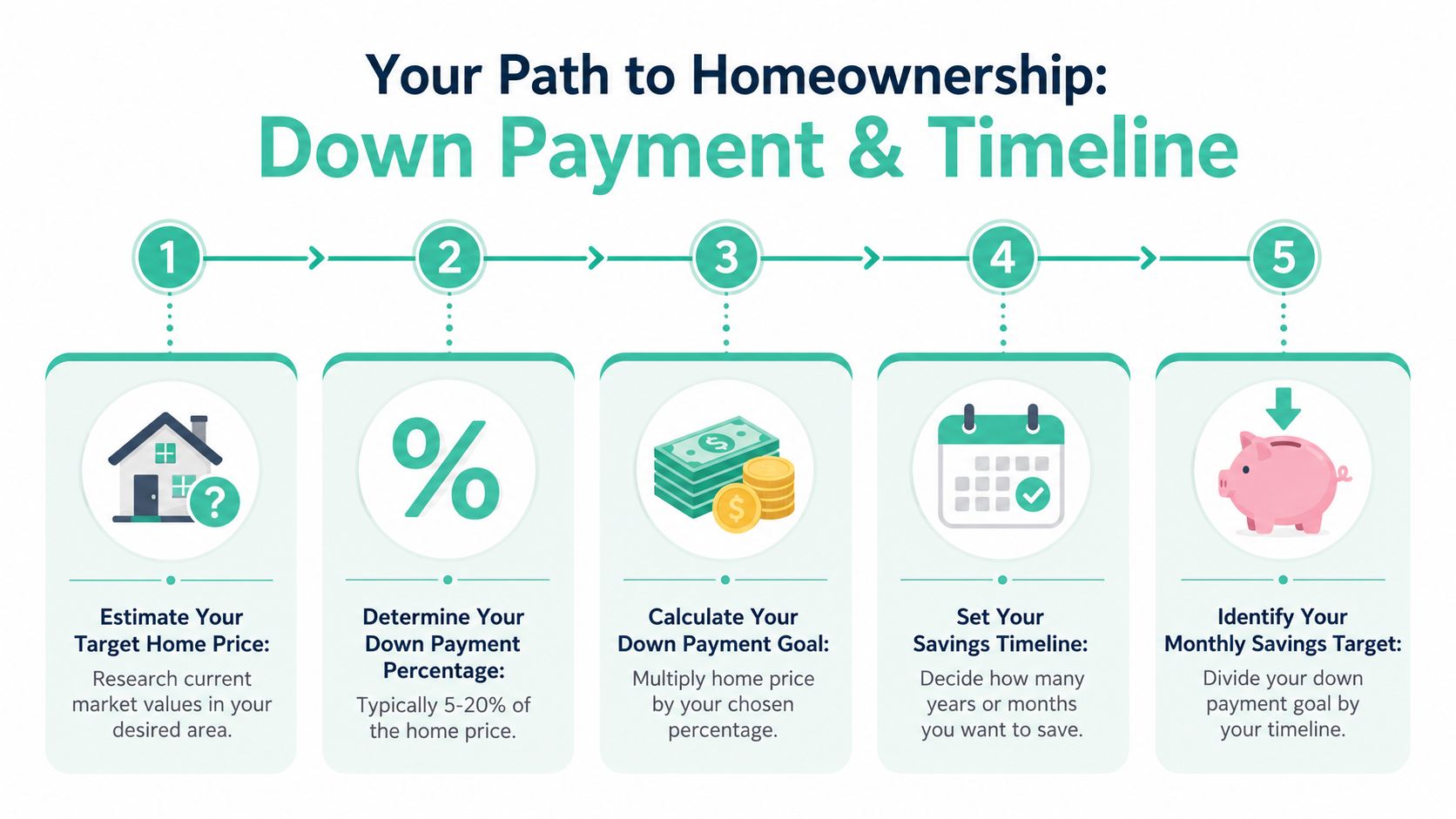
Here's what that can look like in real numbers. If you're aiming for a $350,000 home and plan to put 10% down, that's $35,000. If closing costs land around 3%, that adds $10,500. Add $4,500 for moving, immediate repairs, and a small buffer, and your actual savings target is $50,000, not just the down payment line you started with.
Write that number down somewhere visible. In a manual, privacy-first budgeting app, I recommend creating a dedicated house fund and entering the target yourself. That extra step matters. Manually naming the goal, setting the amount, and checking progress by hand keeps the plan concrete in a way auto-synced accounts often do not. If your overall money system needs cleanup first, this guide on how to organize your finances before setting savings goals can help.
Turn the target into a monthly number
Once you have the full amount, give it a date and do simple math. Divide the total target by the number of months until you want to buy.
If your target is $50,000 and your timeline is 24 months, you need to save about $2,083 per month. If that number is too high, that does not mean the goal is unrealistic. It means one of three inputs has to change. Lower the target home price, extend the timeline, or increase income.
That trade-off is the core work.
I usually tell clients to test at least two timelines before committing. Run the numbers for 18 months, then 24, then 36. A shorter timeline creates urgency, but it can also leave you cash-poor and burned out. A longer timeline reduces pressure, but home prices or rates may shift while you save. There is no perfect answer, only a plan you can follow consistently.
Visual progress helps. Use a tool that lets you set milestones, log contributions manually, and see how each monthly deposit shortens the path to your purchase date. That kind of tracking keeps the goal in front of you without handing over your bank login or relying on background automation to do all the thinking.
A home fund is easier to protect when it has a clear purpose, a target amount, and a deadline.
Create a Budget That Works for You
A home savings plan usually breaks down in the grocery aisle, during a late-night food delivery order, or after three small impulse purchases in one weekend. The problem is rarely one huge mistake. It is spending that feels harmless in the moment and invisible by the end of the month.
That is why I prefer a manual, privacy-first budget for this goal. Typing in purchases yourself is slower than linking every account, but that friction helps. You notice patterns sooner, question them sooner, and adjust before the month gets away from you.
Start with a spending audit
Review the last 60 to 90 days of spending before you set limits. Use statements, receipts, and your budgeting app to log every recurring bill and your most common variable expenses. The goal is to see what your money is already doing, not build an idealized budget from scratch.
Manual entry helps because it separates habits from one-off noise. A streaming charge you forgot about, two convenience store stops each workday, and a ride-share pattern on weekends tell a clearer story once they are categorized. If your money feels scattered, this guide on how to organize your finances before building a budget can help you clean up the system first.
Sort spending into three buckets:
- Keep for expenses you use regularly and would have to replace anyway
- Reduce for categories that matter to you but are drifting too high
- Cut for charges that are automatic, duplicated, or no longer worth the cost
This step gives you options. It also shows which cuts are realistic and which ones only sound good on paper.
Use a framework, then adjust it to real life
The 50/30/20 budget is a useful starting point. The Consumer Financial Protection Bureau explains the rule as a simple way to divide income among needs, wants, and savings or debt payoff.
For someone saving for a home, that split often needs a temporary adjustment. A renter in a high-cost city may already be above 50 percent on needs. Someone living with family may be able to push far more than 20 percent into savings. The point is not to force your life into a perfect ratio. The point is to decide, in advance, how much of your income can go to your home fund without creating a cycle of overspending and guilt.
I usually recommend this order:
- Cover fixed bills and groceries.
- Set aside your home savings amount.
- Reserve money for irregular but predictable costs, such as annual fees, car maintenance, or holiday travel.
- Give yourself a controlled amount for flexible spending.
That last part matters more than people expect.
A budget with no room for coffee, takeout, gifts, or fun rarely lasts. A budget with a clear cap on those categories usually does.
Turn the monthly plan into a daily limit
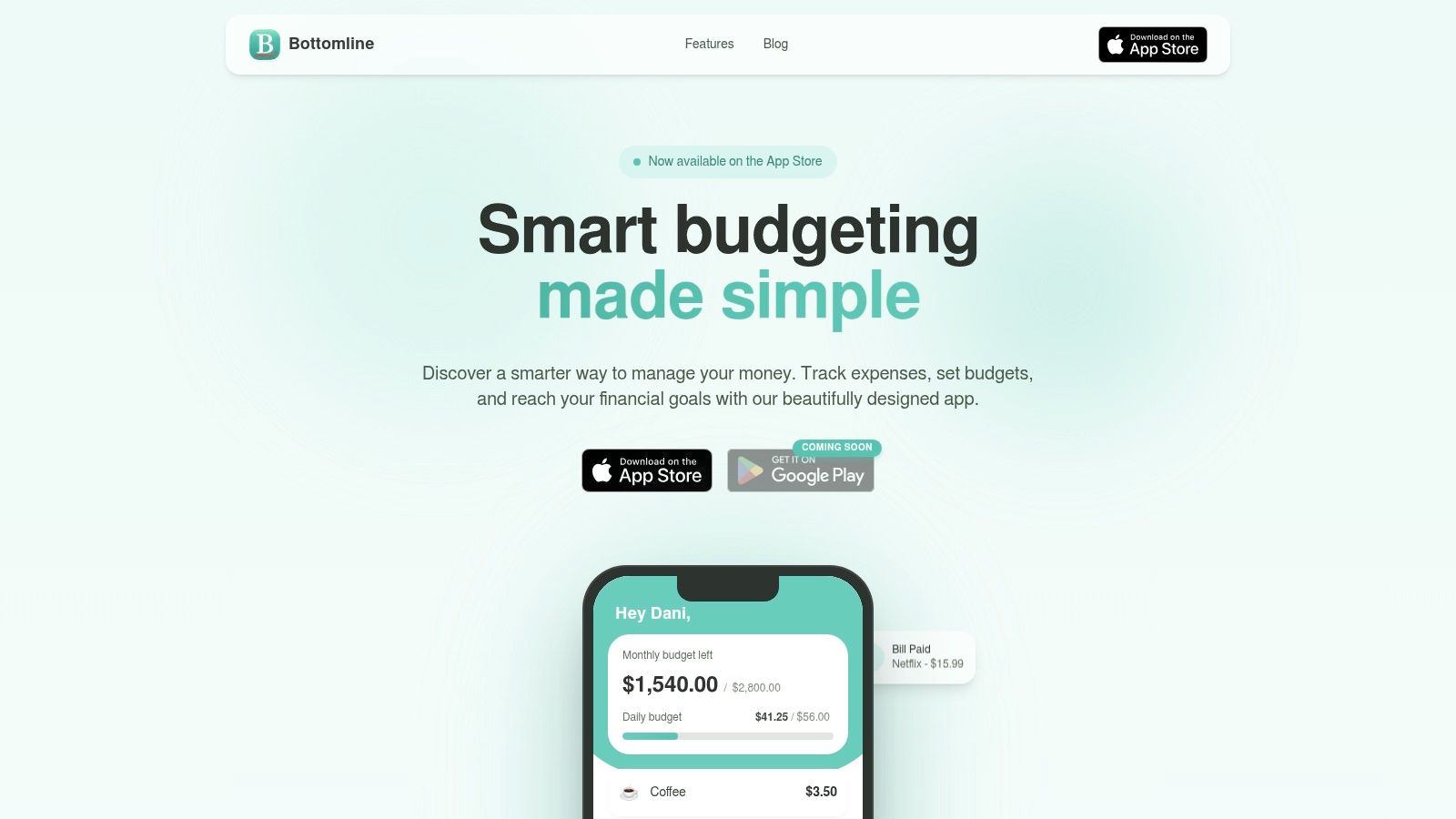
Once the major numbers are set, translate your flexible spending into a daily allowance. This works well in a manual app because you can check the number before you spend, log the purchase right after, and see the trade-off immediately.
Here is a simple example:
- Take-home pay: $4,800
- Fixed bills and groceries: $2,900
- Home savings: $1,000
- True expenses: $300
- Remaining flexible spending: $600
If there are 30 days in the month, that gives you about $20 per day for nonessentials.
That number will not cover every purchase neatly. Some days you spend nothing. Some days you spend more. What matters is that you are working within a limit you can see and manage in real time.
> A daily allowance answers the question that shows up in real life: “Can I buy this today and still stay on track for the house?”
Sample Monthly Budget for a Home Savings Goal
| Category | Allocation | Example Expenses | Monthly Cost |
|---|---|---|---|
| Housing and core bills | Needs | Rent, utilities, insurance, groceries, transportation | Varies by household |
| Flexible lifestyle spending | Wants | Dining out, shopping, entertainment, travel, hobbies | Varies by household |
| Home fund | Savings | Down payment and closing cost savings | Based on your target timeline |
| Emergency fund | Savings | Cash reserve for income disruption or surprise expenses | Based on current cash position |
| Recurring true expenses | Planned non-monthly costs | Annual fees, seasonal costs, irregular essentials | Varies by household |
Keep the structure simple enough to maintain. A budget you review three times a week and update by hand will beat a more complicated system you avoid opening.
Find Ways to Cut Costs and Boost Income
A home savings plan usually stalls for one of two reasons. The monthly gap is too small, or the plan asks for a level of sacrifice that is hard to sustain for a year or more.
The fix is usually practical, not dramatic. Cut the expenses that give you little back. Add income that has a clear path to cash. Doing both at the same time is what changes the timeline.
Cutting costs without burning out
Aggressive frugality looks good on paper and feels terrible by month three. A better plan is to review spending manually, line by line, and look for categories where the trade-off is low and the savings are repeatable.
A privacy-first budgeting app helps here because you enter purchases yourself and assign them on purpose. That extra friction is useful. It forces a quick decision: was this worth slowing down the house fund or not?
Focus on the expenses that keep showing up:
- Recurring bills: Ask for a lower rate on internet, cell service, insurance, or streaming bundles before renewal dates hit.
- Convenience spending: Delivery fees, takeout, coffee runs, and impulse store trips can easily absorb a few hundred dollars a month.
- Category creep: Set a firm monthly cap for the categories that tend to drift, such as dining out, shopping, or weekend spending.
- Short reset periods: A one-week no-spend stretch or a low-buy month can free up cash without turning your whole life into a restriction plan.
If you want a few easy wins, these small habits that save 500 a month are a good place to start.
How income accelerates your goal
Expense cuts create room. Income creates momentum.
In practice, I see this all the time. Saving an extra $150 a month from spending cuts helps. Bringing in an extra $400 to $800 a month from a raise, part-time work, or freelance projects can change the home timeline much faster, especially if that money goes straight to the house fund instead of blending into everyday spending.
That separation matters. Label extra earnings as home fund income in your budgeting app and track it manually as its own category. People are far less likely to spend side income casually when they can see exactly how much it has added to the down payment.
A few realistic ways to increase income:
- Ask for a raise or apply for a better-paid role if your current experience supports it.
- Take on part-time or seasonal work if you want predictable extra income for a defined period.
- Freelance using skills you already have such as writing, design, admin support, tutoring, coding, or bookkeeping.
- Sell unused items and move the money to savings the same day, before it disappears into checking.
The best plans do not rely on one perfect move. They stack steady cuts with targeted income increases, then track both clearly enough to see the payoff.
Automate Your Savings and Keep Them Safe
A good home savings plan should keep working on an ordinary Tuesday when you are busy, tired, and not in the mood to make perfect money decisions. That is why the transfer needs to happen automatically, right after payday, before the rest of your spending starts competing for the same dollars.
The manual part still matters. In a privacy-first budgeting app, log the transfer yourself, label it clearly, and treat it like a fixed bill to your future home. Automatic movement handles consistency. Manual tracking keeps you aware of what the money is for.
Make savings hard to interrupt
Set one recurring transfer for your baseline amount. If your target is $600 a month, schedule $300 from each biweekly paycheck or the full $600 on the first paycheck of the month. The right setup depends on how your income lands and when your fixed bills clear.
Kennebec Savings Bank's overview of automating savings explains the core benefit well. Removing the monthly decision reduces the odds that the money gets spent first and saved later.
CSB's article on saving automatically also makes a practical point I agree with. Small recurring transfers still build momentum, and they are easier to stick with than an ambitious amount you keep canceling. I would rather see someone save $150 every payday for a year than promise themselves $800 a month and miss half the transfers.
If your income changes, update the transfer on purpose. A raise, bonus, tax refund, or side-income month is a chance to increase the home fund without touching your day-to-day budget.
Choose safety over higher returns
Down payment money has a short job. It needs to be there when you are ready to buy.
Fidelity's guidance on short-term savings goals generally points buyers with a shorter timeline toward cash and cash-like accounts, such as high-yield savings, money market accounts, or CDs that mature before the purchase date. That approach makes sense. If you plan to buy within the next few years, protecting the money matters more than chasing stock-market growth and risking a drop right when you need closing funds.
A separate account helps too. Keep the house fund out of your main checking account so a car repair, holiday spending, or a loose idea about a weekend trip does not eat into it.
Here's a useful walkthrough on the idea in video form:
Pair automation with visible checkpoints
Automation keeps the plan running. Visibility keeps you committed.
Use your budgeting app to record each transfer manually and compare it against your target every month. A simple visual helps a lot. This goal progress tracker for savings milestones is a good model for turning a long goal into checkpoints you can respond to.
Chase's explanation of automatic savings tools also notes that round-ups and periodic reviews can support a savings habit. Round-ups are fine as a bonus, but they work best after your main transfer is already set. They should add to the plan, not replace it.
The strongest setup is boring in the best way. Money moves on schedule, sits in a safe account, and shows up in your manual tracker with a clear purpose every single month.
Track Your Progress to Stay Motivated
Saving for a house is long enough that motivation will fade if the process feels invisible. People don't stick with a goal just because it's important. They stick with it when they can see movement.
That's one reason visual tracking matters. A progress bar, a milestone marker, or a chart gives your brain evidence that the sacrifices are doing something. Without that feedback, the plan starts to feel like endless restraint.
Visible progress changes behavior
A recent survey found that 93 percent of Americans have made significant sacrifices to save for a home, and 52 percent of aspiring homebuyers are prioritizing home savings over retirement, according to Raisin's research on savings and homeownership trends.
That matters because it reminds you that the trade-offs you're making are normal. Most future buyers are saying no to other things for a while. You're not doing it wrong. You're doing the work the goal requires.
A few ways to make progress feel real:
- Celebrate mini-milestones when you hit meaningful markers in your goal.
- Review monthly, not obsessively so you stay engaged without turning the process into stress.
- Rename the goal clearly so every contribution feels connected to something specific.
- Use visual tools that show both total saved and time remaining.
If you want ideas on structuring that kind of visual momentum, this guide to a goal progress tracker is helpful.
> Home saving gets easier when the routine gives you small wins along the way.
Your Home Savings Questions Answered
Should I pause retirement contributions to save faster
Be careful here. For low-to-moderate-income households, retirement savings are a substantial driver of wealth and can sometimes matter even more than business equity, according to the Urban Institute's analysis of how lower-income households build wealth. Pausing contributions can speed up a down payment, but it can also create a serious long-term compounding cost. If you reduce retirement saving temporarily, do it deliberately, for a defined period, and only after weighing the trade-off.
What should I do with a bonus, gift, or tax refund
Send it straight to the home fund. Windfalls work best when they never mingle with regular spending. If you let them sit in checking, they tend to dissolve into lifestyle purchases that you won't remember later.
How do I save with irregular or freelance income
Use a base target and a sweep rule. Keep your essential monthly obligations grounded in conservative income. Then, whenever income comes in above that baseline, move a preset share directly to the home fund. Manual budgeting works especially well here because you can adjust in real time without relying on messy account syncing.
---
Bottomline is a smart fit for iPhone users who want a simple, privacy-first way to manage a home savings plan without linking bank accounts. You can track expenses manually, monitor recurring costs, and use milestones to save for goals with a recurring amount and a clear timeline to completion. If you want a budgeting tool that supports intentional spending instead of passive autopilot, try Bottomline.